How Shopify Brands Can Avoid the AI Slop Backlash Using Hybrid AI Photography
The Tipping Point for Synthetic E-Commerce Media
Right now, the internet is undergoing a massive correction. July 2026 has brought a harsh reality check for brand owners relying on fully synthetic media to drive sales. SharkNinja recently made headlines by outright banning creators from using artificial intelligence to generate content in its affiliate program. The company’s Chief Commercial Officer publicly stated they want real consumers seeing real products being used by real people. Concurrently, TikTok Shop is aggressively updating its commission structures and algorithms to crack down on what the industry now universally calls "slop" ads—deceptive, low-effort synthetic videos and images flooding user feeds.
Buyers are getting smarter and vastly more skeptical. Recent market research indicates that a staggering 70% of consumers now distrust companies to use artificial intelligence responsibly, and heavy reliance on AI for product visuals is actively eroding brand trust. Shoppers are tired of scrolling past physics-defying kitchen gadgets, eerily smooth apparel flat-lays, and lifestyle models with incorrect anatomical features.
We all know the crushing expense of traditional photography. Booking a studio, hiring models, renting props, and paying a retoucher can easily consume thousands of dollars for a single seasonal campaign. Software promised a way out of that financial drain.
That math is exactly why so many operators rushed to automate their visual merchandising. But if the resulting imagery destroys buyer confidence and triggers a wave of platform penalties, the cost savings immediately evaporate.
Where Fully Generative Workflows Break Down
If you have been working in retail media over the past few years, you likely tested the early batch of generative tools. Platforms like Photoroom, Pixelcut, and Claid.ai provided incredible workflow speedups for basic background removal and simple scene creation. Kive.ai helped creative directors pull together brilliant visual reference boards. Botika made huge strides in swapping out apparel models for diverse looks.
These solutions were massive leaps forward. The breakdown happens when a diffusion model is allowed to interpret or alter the actual physical merchandise you are selling.
Let us look at a concrete scenario. Imagine you run a Shopify store selling premium leather Chelsea boots. You snap a quick photo of your new inventory on a smartphone and run it through a basic text-to-image generator, prompting it for a rugged outdoor lifestyle shot in the Pacific Northwest. The software spits out a moody, beautiful image of your boot resting on a mossy log.
Look closely at the resulting asset. The heavy stitching on the leather welt has disappeared entirely. The brass eyelets are slightly oval instead of perfectly round. The brand logo debossed into the heel is an unreadable smudge of pixel artifacts.
Your customer buys that boot based on the moody aesthetic. A week later, they open the cardboard box on their kitchen island, hold the physical item up to the light, and realize it looks fundamentally different than the advertisement. They immediately initiate a return. A minor bump in your return rate can absolutely gut your quarterly profitability, completely wiping out whatever money you saved by avoiding a professional photographer.
Defining the Hybrid AI Photography Method
We need a fundamentally different path forward. The most sustainable strategy for retail media right now is hybrid AI photography.
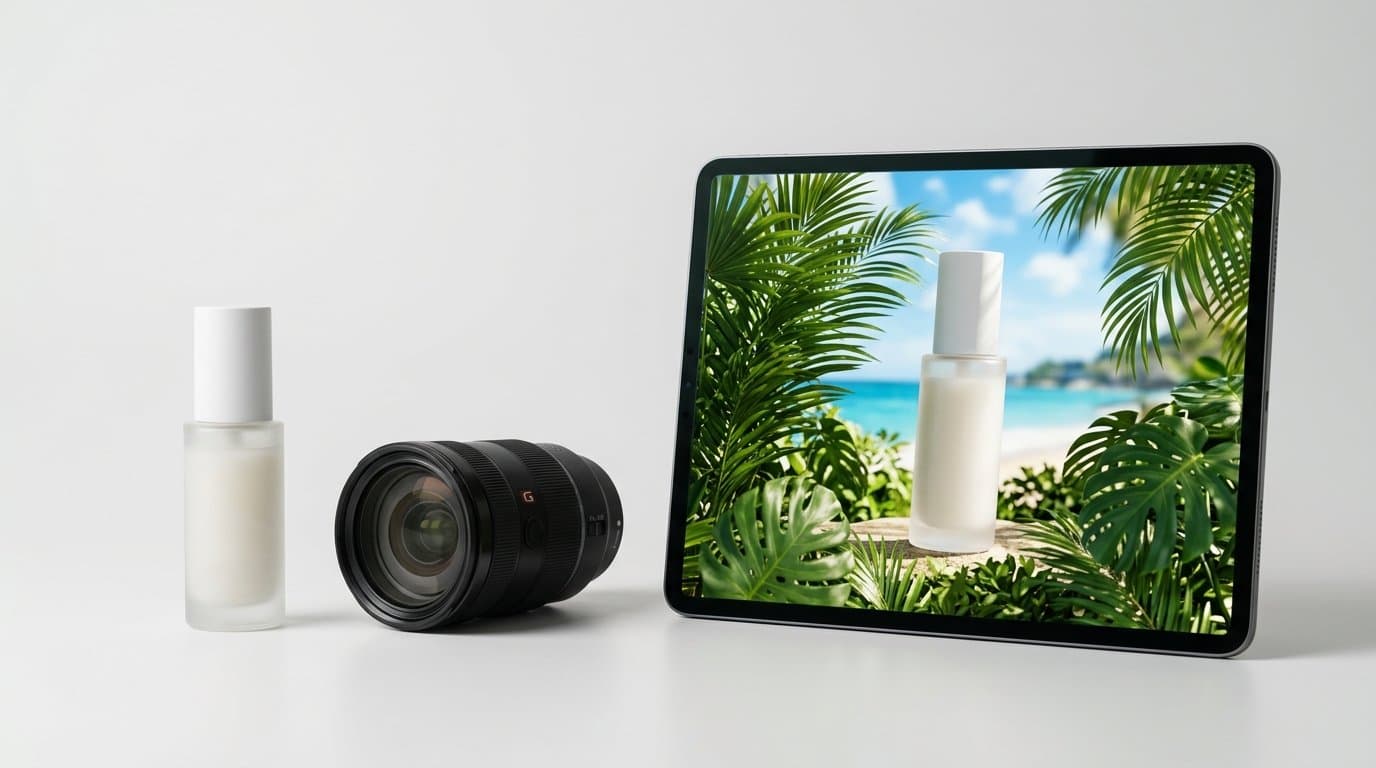
Instead of asking a neural network to hallucinate an entire image from scratch, a hybrid pipeline strictly separates the environment from the subject. The environment is synthetic. The product is photographic.
Think about a direct-to-consumer brand selling ceramic non-stick cookware. The marketing team needs a hero image for a new sage-green frying pan. Under a hybrid workflow, they capture a high-resolution, perfectly lit studio shot of the pan on a neutral grey background. The color grading is mathematically exact. The brushed steel handle looks exactly like the brushed steel handle sitting in their fulfillment warehouse.
They then use generative tools to build a stunning, sunlit Mediterranean kitchen counter. The software handles the marble textures, the scattered basil leaves, and the soft morning light filtering through an unseen window. Finally, the true-to-life product asset is composited into this generated scene.
The pan remains completely unaltered. The lifestyle context provides the emotional hook required for high conversion rates.
This is exactly where Modelize steps in, giving merchants a specialized way to pair high-quality AI-generated environments with un-warped, photographically accurate product assets to preserve buyer trust. You get the visual diversity of a massive location shoot without compromising a single pixel of your actual merchandise.
Executing a Trust-Preserving Visual Strategy
Building out this workflow requires a shift in how your creative team operates. In our experience, simply slapping a raw product file onto a generated background often yields a flat, amateurish result. You have to build processes that respect the laws of physics.
- Start with absolute truth in your capture phase. We highly recommend shooting your inventory in a controlled lighting environment with a color checker passport. You do not need a massive studio setup to pull this off. A decent mirrorless camera, two softboxes, and a clean white backdrop will give you the un-warped raw materials required for the rest of the pipeline.
- Force physical constraints onto your synthetic lighting. Lighting geometry must match exactly. If your generated lifestyle background features strong directional sunlight coming from the upper left, your original product shot needs highlights on the left and a cast shadow falling to the right. Human brains are remarkably adept at noticing subtle lighting mismatches, even if the viewer cannot articulate exactly why an image looks fake.
- Keep your environments grounded in logical reality. The temptation with generative tools is to go wild just because you can. Putting a daily vitamin supplement on a floating obsidian pedestal in the middle of a glowing neon desert might grab attention for two seconds, but it does absolutely nothing to communicate trust or product utility. Place that same bottle on a clean bathroom shelf next to a folded white towel. Boring setups often convert best.
- Control your affiliate pipeline aggressively. The recent policy changes from major brands should be a massive wake-up call for marketers. If you rely on micro-influencers to drive social commerce sales, provide them with a centralized library of approved, hybrid-generated assets. Do not leave independent creators to their own devices to spin up hallucinated product demos that ultimately degrade your brand equity and risk platform bans.
The Financial Argument for Authenticity
Visual merchandising serves a very specific economic function for your store. It reduces perceived risk.
When a shopper lands on your Shopify product page, they are actively looking for reasons not to buy. They zoom in on fabric textures to see if a running jacket looks cheap. They scrutinize the ingredient label on a jar of night cream to verify the contents. Every genuine micro-signal pushes them closer to the checkout button.
If a potential buyer senses that a product image is heavily altered, their perceived risk skyrockets. Distrust translates directly into abandoned carts and plummeting return on ad spend.
By adopting a hybrid methodology, you protect the conversion baseline established by traditional photography. Your customers still get to scrutinize the actual fabric weave, the real metal finishes, and the exact Pantone colors of your physical inventory. You simply replace the bloated logistical costs of location scouting and physical set design with efficient software generation.
Navigating the Next Phase of Retail Media
We also have to consider the gatekeepers controlling our traffic. Social networks and search engines are under immense pressure to clean up their feeds and protect users.
Platforms are actively deploying aggressive classification algorithms to identify and suppress purely synthetic spam. They want to keep users engaged, and users genuinely despise feeling tricked by deformed, machine-generated gadget advertisements. Accounts caught repeatedly pushing deceptive visuals are seeing their reach severely throttled. The era of the zero-effort, fully automated e-commerce hustle is rapidly closing.
A hybrid approach inherently insulates your brand against these algorithmic penalties. Because your core product imagery consists of genuine photographic data, it bypasses the uncanny valley triggers that trip up automated spam filters. Your advertisements look like real advertisements because they feature real items at their center.
This strategy requires a bit more effort than typing a single text prompt and hitting enter. It requires careful thought, intentional lighting setups, and a strict commitment to accuracy.
That friction is exactly what separates enduring retail brands from fly-by-night dropshippers. Real e-commerce growth relies on repeat purchases. Repeat purchases rely on absolute trust. Delivering exactly what your customer saw on their screen is the only way to build it.
Generate Stunning Product Photos with AI
Modelize is a Shopify app that creates professional product images in seconds - AI models, backgrounds, and more. No photoshoot needed.