How to Offset the August 2026 Shipping Rate Hikes Using AI Product Photography
The Reality of the August 2026 Shipping Squeeze
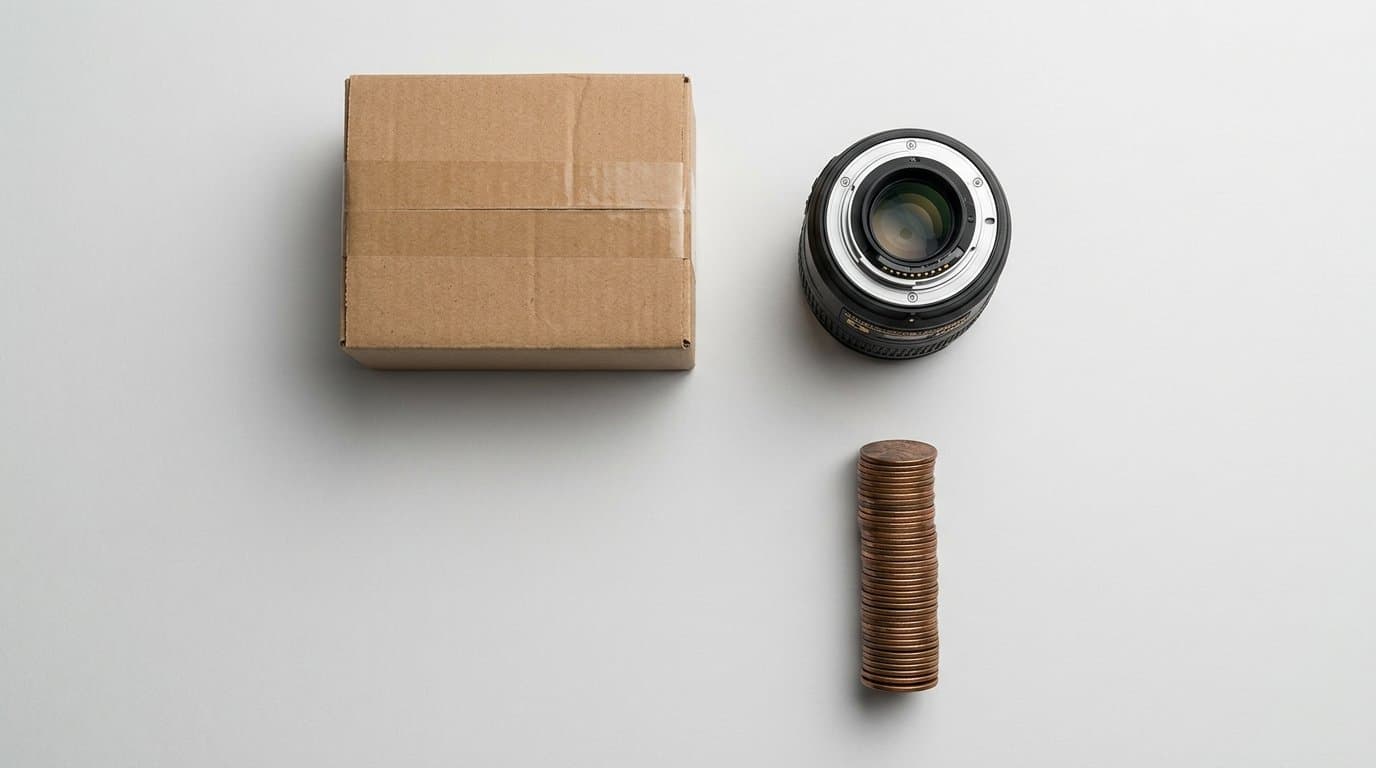
Merchants are feeling a very specific kind of pain right now. The United States Postal Service implemented a rate adjustment in August 2026 that pushes shipping costs up by roughly 5.4 percent across most major service categories. Combine that with the 5.9 percent baseline rate increases FedEx and UPS slapped on shippers earlier this year. The result is brutal. The cost to move a physical box from your warehouse to a customer's front door has never been heavier.
We're seeing profit margins getting hammered across the board.
You can't simply out-negotiate the postal service. You might optimize your box dimensions to dodge some cubic weight penalties, or switch from rigid boxes to flexible poly mailers, but the baseline reality remains unchanged. Fulfillment is getting aggressively more expensive. When logistics costs rise, brand owners typically face two grim choices. You can raise your retail prices and risk a massive spike in cart abandonment. Or you can eat the margin loss.
Neither option builds a sustainable brand. To actually protect your profitability, we've found that DTC operators need to look completely outside the warehouse. You have to find a massive operational cost you can slash to offset the logistics bleed.
The Financial Weight of Traditional Photoshoots
Logistics optimization usually yields fractional savings. Shaving twelve cents off a corrugated box doesn't solve a sweeping 5 percent shipping hike. You need a bigger lever. We always point merchants toward their creative budgets.
Producing high-quality product photography is notoriously expensive. We speak with e-commerce marketers daily who spend an agonizing amount of capital just getting their items ready for a digital storefront. The traditional photoshoot model is fundamentally broken for modern retail margins. It's slow, rigid, and intensely capital-heavy.
Think about the actual logistics involved in launching a modest 40-piece autumn apparel collection. It takes weeks of coordination.
- You pay a commercial photographer a day rate that easily clears $1,500.
- You rent a specialized studio space.
- You hire professional models, a makeup artist, and a wardrobe stylist.
- You pay for days of post-production retouching to fix lighting issues and remove stray hairs.
In our experience, it's entirely common for brands to spend $200 to $400 per SKU just to secure basic lifestyle and on-model shots. That means you're burning $8,000 to $16,000 before a single customer even views a product page. That capital could be deployed toward customer acquisition or inventory, but instead, it gets trapped in content creation.
Swapping Studio Overhead for AI Generation
We've watched agile brands completely neutralize their rising shipping costs by eliminating these traditional photoshoots. Artificial intelligence has progressed far past the novelty phase. It's now a direct, practical margin-preservation tool.
Shifting from physical studios to AI product photography drops your content creation cost from hundreds of dollars per item down to literal pennies.
The process is remarkably straightforward. Instead of shipping physical samples to a Brooklyn loft, your warehouse team snaps a basic, well-lit photo of the product using a smartphone. That base image gets fed into a generative AI platform. Within seconds, the software contextually places the item into any environment you can imagine.
If you sell camping gear, you can shoot a basic side-profile of a tent and instantly generate a background featuring a misty Pacific Northwest forest. If you run a clothing brand, you can drape your garments on a ghost mannequin and use an app like Modelize to generate realistic on-model imagery across diverse body types. Other tools in the space like Photoroom, Pixelcut, and Claid.ai are pushing boundaries for basic background removal, while platforms like Botika and Kive.ai focus heavily on specific visual niches.
The strategy is incredibly simple. You maintain your high visual merchandising standards while stripping out the crushing overhead of physical production.
The Margin Math: A Concrete Example
Let's look at this financial pivot in action.
Imagine a DTC home goods brand launching a new line of ceramic dinnerware. They expect to process 15,000 orders this quarter. Due to the August 2026 carrier hikes, their average shipping cost just increased by $0.60 per order. That is an unexpected $9,000 hit to their quarterly profit.
They need visual assets for 30 new SKUs.
The old way requires shipping heavy boxes of fragile plates to a commercial studio. They pay a prop stylist to source fresh ingredients, hire a lighting expert, and spend three days capturing lifestyle flat-lays. The total invoice lands at $11,000.
The new way involves snapping clear iPhone photos of the plates on a plain grey table. They use AI to generate a rustic Italian kitchen background, complete with perfect afternoon shadows streaming through a virtual window and scattered flour on a wooden counter. The software subscription costs less than $50 a month.
They just saved $10,950 on content creation. That single decision fully subsidizes the $9,000 shipping rate increase across all 15,000 orders, with a couple of thousand dollars left over. This is how smart operators are surviving the logistics squeeze.
Optimizing Visual Merchandising Without the Budget
A common fear we hear from Shopify merchants is that cutting photography budgets will inevitably result in cheap-looking visuals. Cheap visuals destroy consumer trust. When trust drops, conversion rates tank.
But the current generation of AI tools produces photorealism that genuinely matches high-end commercial studio work. The lighting interacts naturally with the product contours. The shadows fall exactly where they should based on the generated environment. Customers can't tell the difference, and your metrics will reflect that.
Beyond cost savings, replacing photoshoots with generative AI gives you unprecedented flexibility in your visual merchandising.
- Infinite A/B Testing: You can test a coffee bag sitting on a modern marble countertop against a cozy wooden cabin table to see which drives higher clicks.
- Instant Seasonal Refreshes: You can turn a summer beach tote into an autumn weekend bag just by swapping the generated background environment from sand to fallen leaves. You do this in five minutes without booking a reshoot.
You get better data and more relevant assets while spending a fraction of the money.
Practical Steps to Implement the Pivot
Transitioning to AI-generated assets does require a slight workflow adjustment for your team. We recommend taking a phased approach rather than firing your entire creative agency overnight. Start small. Prove the concept.
First, tackle your product variants. If you sell a t-shirt in eight different colors, you absolutely don't need to photograph all eight on a human. Shoot the base color, use AI to map the exact color variants, and apply those to different virtual models. This cuts your required base photography instantly.
Next, build an internal guideline for input images. The secret to professional AI output is giving the system a clean, clear starting point. You need to standardize how your team takes those initial flat-lay or mannequin shots.
Here are the rules we follow for base photos.
- Use flat, even lighting. Avoid harsh shadows on the original item, as the AI will add its own contextual shadows later.
- Keep the camera angle straight.
- Ensure the product itself is perfectly in focus.
- Leave empty space around the item so the software has room to generate the surrounding environment.
- Clean the product thoroughly. The AI will preserve dust or smudges if they're clearly visible on the source image.
If you nail the base photo, the generative engine will handle the rest flawlessly.
Controlling What You Can Actually Control
The shipping increases we're seeing in August 2026 are just the current obstacle. Carrier rates will undoubtedly continue to climb next year. Advertising costs on major social platforms show absolutely no signs of dropping. Building a resilient e-commerce business means aggressively protecting your margins where you can actually exert control.
Creative production is one of the few massive line items left that can be dramatically reduced without harming the customer experience.
A shopper doesn't care if your stunning lifestyle image was taken in a high-end Los Angeles studio or generated by an algorithm in thirty seconds. They only care that the product looks appealing, authentic, and accurately represented.
Stop letting logistics fees dictate your profitability. By swapping expensive traditional photoshoots for AI generation, you reclaim your margin. You gain the ability to refresh your digital storefront as often as you like. The brands surviving the current retail margin squeeze aren't the ones fighting carriers over pennies. They are the ones rethinking their largest operational costs entirely.
Generate Stunning Product Photos with AI
Modelize is a Shopify app that creates professional product images in seconds - AI models, backgrounds, and more. No photoshoot needed.