How to Boost Shopify AOV Using AI-Generated Shop the Look Photography
The Fitting Room Gap
Walk into any physical boutique on a Saturday afternoon. A sales associate spots you holding a linen camp collar shirt. Before you even reach the fitting room, that associate hands you a pair of pleated olive trousers and a woven leather belt. They suggest you try them all together. You try the complete outfit. You buy all three items.
Physical retail operators call this units per transaction. It's the lifeblood of brick and mortar profitability.
Online stores rarely replicate this interaction. A shopper lands on a Product Detail Page for that same linen shirt. They see a picture of a model wearing the shirt. They evaluate the shirt in complete isolation. They buy the shirt alone. E-commerce merchants spend years trying to patch this specific missing link using recommendation widgets, static text bundles, and popups. We've all seen the "Frequently Bought Together" boxes buried at the very bottom of a product page. Those widgets convert poorly because they lack visual context.
Visual context drives Average Order Value. When customers see a cohesive aesthetic rather than an isolated item, they are significantly more likely to purchase the entire look. Industry data from virtual try-on and outfitting platforms shows that shifting the purchase focus from single items to styled looks can push AOV up by 20 to 40 percent.
Executing a genuine outfitting strategy requires showing the exact items you sell, styled together on a realistic human figure. For a long time, making that happen hit a massive operational and financial wall.
The Math That Killed E-Commerce Outfits
If you run a Shopify apparel brand with just 50 tops and 50 bottoms, you technically have 2,500 potential outfit combinations. Photographing even five percent of those pairings on a live model would completely drain a standard marketing budget.
Traditional photoshoots require a rigid set of fixed costs. You book a lead photographer and a lighting technician. You secure agency models at day rates. You hire a wardrobe stylist to pin, tuck, and tape every layer so the garments drape correctly. You rent a studio space. Then the post-production team charges per image to clean up stray hairs and adjust color balance.
Think about the logistics of a standard shoot. A model can only change clothes so many times in an eight-hour day. If you want to show your best-selling black jeans paired with fifteen different seasonal tops, you're burning through hours of expensive studio time just waiting for wardrobe changes. The math simply doesn't work for independent operators.
Because of these hard costs, merchants typically shoot a hero item with neutral, unbranded styling pieces. The stylist brings a rack of generic denim or blank white t-shirts to pair with your core products. The model looks great. The customer might even love the jacket the model is wearing with your bestselling denim. The problem is they can't buy that jacket from you. You just gave them an incredible styling idea that they will fulfill at a competitor's store.
Earlier generation AI photography tools helped speed up catalog production, but they didn't solve this outfitting problem. Apps like Photoroom or Pixelcut gave merchants a fast way to drop single items onto clean white backgrounds. Platforms like Claid.ai and Botika pushed things further by generating AI models for individual garments. These tools were fantastic for basic catalog consistency. They didn't do anything for cross-selling. You still ended up with a grid of isolated products.
The 2026 Shift to Multi-Garment Generation
Customer expectations around digital shopping shifted rapidly over the last couple of years. Major marketplaces trained shoppers to expect dynamic outfitting right in their feed. eBay rolled out generative AI styling carousels that actively curate personalized outfits based on user browsing history. If a shopper looks at a vintage band tee, the algorithm generates a full visual look incorporating boots and denim. Consumers now expect to see how different items interact before they commit to a purchase. eBay's move was a massive signal to the broader retail space. When a marketplace of that size invests heavily in AI outfitting, it resets the baseline for what a normal digital shopping experience looks like.
Mid-2026 advancements in multi-garment AI generation fundamentally alter the unit economics of fashion e-commerce. You no longer need to physically style two pieces of clothing on a human being to get a photorealistic lifestyle shot.
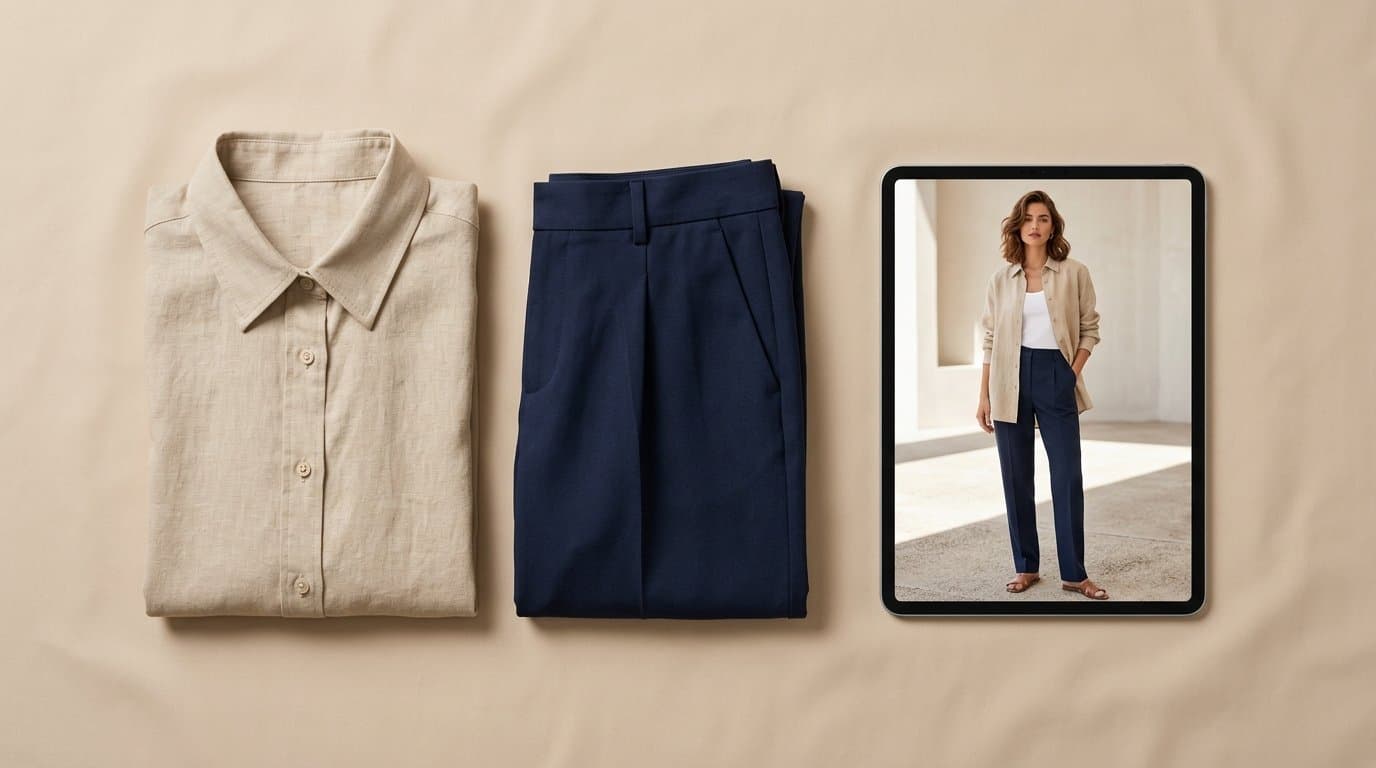
The process is straightforward. You take a flat-lay image of a new knit sweater. You take a separate flat-lay image of your core denim line. You upload both files into an AI engine. The software maps the two distinct garments onto a generated human figure. The engine understands context. It knows how the heavy knit of the sweater should drape over the rigid waistband of the jeans, or whether a shirt should be tucked or untucked. The output is a single, cohesive image of a model wearing both items.
The marginal cost of generating that specific combination is zero. You can create 50 different outfits for a single pair of pants without booking a single hour of studio time.
Strategic Pairings to Maximize Cart Size
Merchants can finally build visual merchandising strategies based on inventory data rather than photoshoot constraints. We've seen Shopify store owners completely overhaul their bundle strategies using multi-input photography.
You can pair your core volume drivers with high-margin items to boost profitability. If a lightweight summer blouse is your main traffic magnet, you can dynamically pair it in AI-generated photos with premium linen trousers. The blouse gets them in the door. The visual pairing convinces them to buy the high-margin trousers.
Here are a few specific ways operators apply this capability:
Creating visual anchors for dynamic checkout blocks. Instead of relying on a text-based upsell prompt, the shopper sees a real model wearing the exact shirt they are viewing, paired with matching shorts. You can insert this image directly into a cart slide-out window. Seeing the actual outfit makes the upsell feel like a styling service rather than a sales pitch.
Breathing life into slow-moving inventory. If a specific colorway of a skirt is underperforming, it often just needs better context. Merchants can generate new lifestyle assets styling that slow-moving skirt with an undisputed bestseller. The underperforming item borrows conversion power from the popular item.
Executing rapid seasonal transitions. When fall approaches, you don't need to discard your summer inventory. You can take flat-lays of your summer slip dresses and use AI to generate images of models wearing those dresses layered under chunky autumn cardigans and leather jackets. You instantly extend the selling season of lightweight garments.
Building dedicated outfitting landing pages. You can spin up a weekend editorial lookbook on a Thursday afternoon. If you notice a sudden spike in search traffic for festival outfits, you can grab five tops and five bottoms, generate the on-model pairings, and launch a targeted landing page in a matter of hours.
Prepping Your Catalog for Multi-Input AI
The quality of a multi-garment generation depends heavily on the source material. AI engines are highly capable, but they cannot invent structural details you hide from them. Clean inputs give you imagery indistinguishable from a Brooklyn studio session. Messy inputs lead to weird synthetic artifacts, like a belt loop melting into a shirt button.
Shoot your flat-lays with even, diffused lighting. Harsh shadows confuse the AI depth sensors.
Lay the garments out naturally. Avoid excessive folding or weird angles that obscure the cut of the fabric. The AI needs to see the silhouette. If a jacket has a specific lapel roll, make sure the flat-lay shows it clearly. If a pair of pants features a unique cargo pocket on the side, angle the leg slightly so the camera captures that volume.
Steam the clothes. Wrinkles in a flat-lay will translate into weird textural glitches on the generated model.
When you bring those separate images into a specialized e-commerce engine like Modelize, the system calculates the depth and proportions automatically. It figures out where a hem should fall, how a sleeve cuffs around a wrist, and where the lighting should hit the fabric. Taking an extra two minutes to prep your flat-lays ensures the final generated outfit looks entirely natural.
Upgrading the Shopify Architecture
Generating the images is only the first step. You have to place these assets strategically across your Shopify storefront to actually capture the higher Average Order Value.
Start with the product detail page. The main image carousel should always begin with the single item clearly displayed. By the third or fourth image slot, introduce the multi-garment lifestyle shots. Add a clear call to action below the add to cart button featuring the complementary item shown in that photo.
Next, rethink your collection pages. A standard grid of ghost mannequin shirts gets boring very quickly. Break up the visual monotony by inserting full-outfit lifestyle shots every few rows. Make those lifestyle images shoppable. When a user hovers over the model, show quick-add buttons for both the top and the bottom.
Email marketing workflows offer another huge opportunity. Post-purchase sequences are perfect for outfitting. If a customer buys a pair of tailored suit pants on Tuesday, send them an automated email on Thursday featuring an AI-generated image of a model wearing those exact pants with three different blazers you sell. You're providing genuine styling value while explicitly asking for a second order.
Paid social campaigns also benefit massively from multi-garment visuals. Running a Meta ad featuring a single isolated pair of pants forces the user to imagine how they might wear it. Running an ad showing those same pants styled three different ways proves versatility. You capture attention with a complete aesthetic, which drives higher click-through rates and primes the visitor to add multiple items to their cart the moment they land on your site.
The Financial Realities of Virtual Cross-Selling
Most conversion rate optimization advice focuses entirely on getting a visitor to click the buy button once. Optimizing strictly for a single click ignores the broader financial health of your retail business. Customer acquisition costs are simply too high to survive on single-SKU orders. You pay the exact same amount for an ad click whether the customer buys a twenty dollar t-shirt or a two hundred dollar outfit.
Visual outfitting forces the customer to consider the whole aesthetic. They stop asking if they like a specific shirt and start asking if they want the entire vibe the model is projecting.
By generating on-model pairings of your own inventory, you keep the shopper engaged strictly with your catalog. They do not have to open a new tab to find pants that match. You have already shown them the exact pair, proved that they look great together, and made both available in one single transaction.
Small to mid-sized direct to consumer brands can now wield the visual merchandising power of a massive global retailer. You have the freedom to test infinite clothing combinations. You can react to micro styling trends on TikTok immediately. You can continually drive up your Average Order Value without adding a single dollar to your production budget or waiting weeks for a photography studio to deliver final files. The ability to style products dynamically is exactly how independent merchants will compete and win moving forward.
Generate Stunning Product Photos with AI
Modelize is a Shopify app that creates professional product images in seconds - AI models, backgrounds, and more. No photoshoot needed.