Buyer Journey Compression: How AI Search Changes Your Shopify Image Strategy
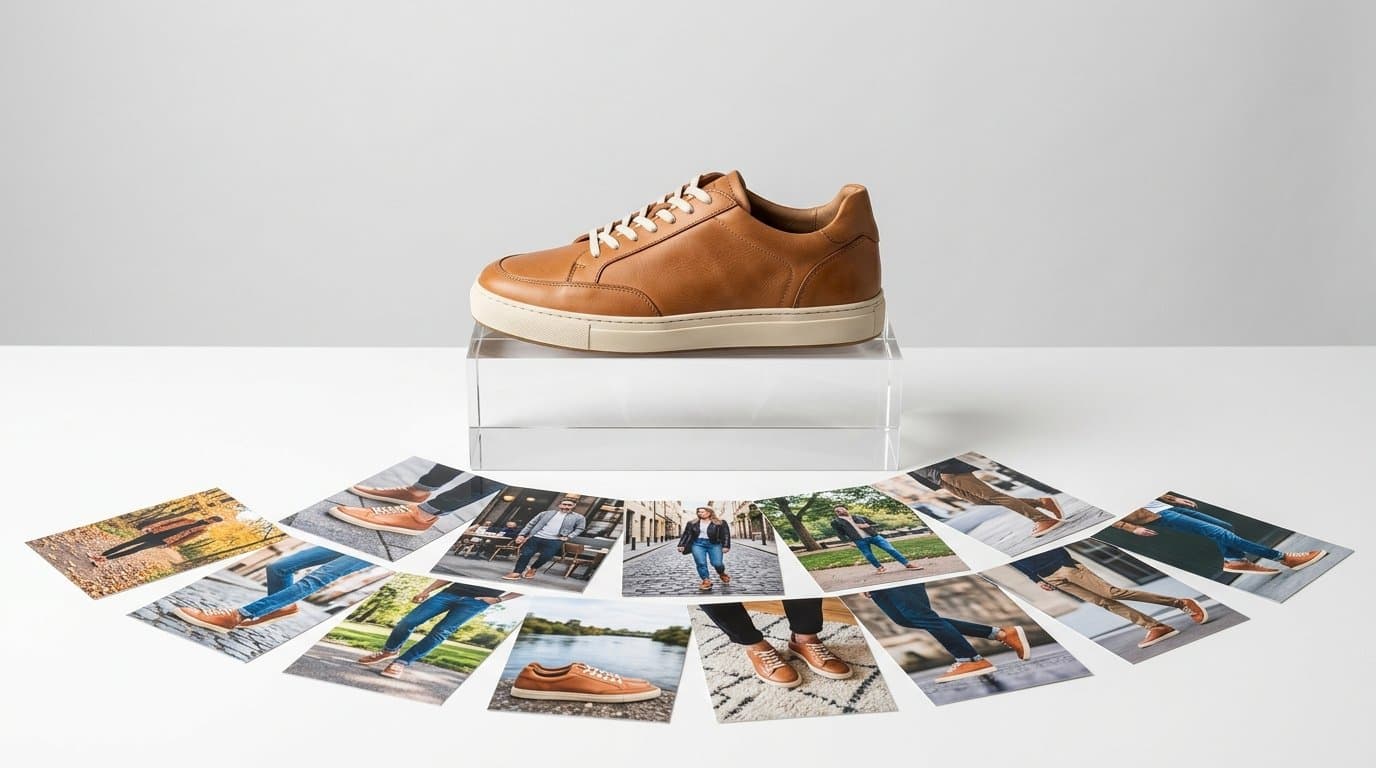
The New Front Door: Decoding Shopify's Latest Q2 Data
During Shopify's second-quarter earnings call in August 2026, President Harley Finkelstein shared a metric that should fundamentally alter how DTC brands approach visual merchandising. AI-referred traffic to Shopify stores has officially tripled year-over-year. Orders originating from AI search channels tripled right alongside it. New buyers arriving through these channels are placing orders at nearly twice the rate of traditional traffic sources.
Those are impressive numbers. But the real story is hidden in how those shoppers arrive.
Half of all AI-referred sessions on Shopify now go straight to a Product Detail Page (PDP). That rate is 2.5 times higher than sessions arriving through traditional organic search. Shoppers are bypassing the homepage entirely. They skip the "Our Story" page and ignore those carefully curated collection grids.
Shopify calls this behavioral shift "buyer journey compression".
This term perfectly describes a massive structural change in online retail. Discovery and consideration are collapsing into a single conversation happening off-site. Shoppers are chatting with tools like ChatGPT, Claude, or Google's AI Overviews to compare specs, read reviews, check compatibility, and weigh trade-offs. By the time a link is clicked, the heavy lifting of product research is largely finished. The shopper arrives at your PDP with high intent, holding their wallet.
If your product page can't instantly validate their decision with comprehensive visual context, they will bounce.
What Buyer Journey Compression Means for Merchandising
Consider how a typical customer bought a heavy-duty hiking jacket three years ago. They might search Google for "best waterproof jackets for men." They would click a blog listicle, discover your brand, and click through to your homepage. From there, they would navigate to the outerwear collection, click a specific jacket, and read the product description. The website structure gently guided them down the funnel.
That funnel is now flat.
Today, that same customer asks an AI assistant, "Which men's waterproof jackets under $250 have pit zips, a helmet-compatible hood, and weigh under 14 ounces?" The AI aggregates the data, provides a tailored recommendation, and links directly to the specific jacket on your store.
Your PDP is suddenly forced to act as the initial greeting, the brand pitch, the sizing guide, and the checkout counter all at once. If the customer lands on a page with two sterile, white-background studio shots, you have a problem. They lack the visual evidence needed to trust the AI's recommendation. They need to see how the jacket fits a real human body, how the hood interacts with a climbing helmet, what the fabric looks like under natural light, and how large it is when packed down.
The Product Detail Page as a Standalone Storefront
We've seen countless brands treat their PDP image galleries as an afterthought. They spend massive budgets on splashy homepage videos or Instagram campaign imagery, leaving the actual product pages bare.
That allocation model is obsolete.
When half of your most lucrative, highest-converting traffic lands squarely on a specific SKU, that page must contain an entire world. The image carousel is no longer just a place to show the front, back, side, and interior of an item. It must tell the complete story of your brand identity while answering every lingering question the shopper might have.
Visual merchandising now requires a volume and variety of imagery that most brands previously reserved for seasonal lookbooks. A shopper arriving with high intent needs immediate reassurance.
If you sell minimalist ceramic dinnerware, the buyer who lands on your PDP needs more than an isolated plate. They need to see a flat-lay of the dinner plate, salad plate, bowl, and mug together to gauge relative proportions. They want a lifestyle shot of a crowded dinner party to understand the aesthetic vibe. They need a close-up macro shot of the glaze to trust the texture. Every missing visual context is a reason to abandon the cart.
The Missing Link in E-Commerce Conversion
Text descriptions rarely close a sale on their own. People scan bullet points, but they study photographs.
A comprehensive PDP image gallery is the strongest tool a merchant has to reduce friction. This requires a strategic mix of photography styles.
You need standard on-white studio shots for clarity. You must have on-model photography to demonstrate scale, drape, and fit. Lifestyle and in-situ imagery provide aspirational context. Flat-lays communicate how the item pairs with other products in your catalog.
Achieving this mix manually is brutal.
Producing a dozen varied, high-quality images for a single product requires a massive logistical effort. Booking models, renting studio space, hiring photographers, shipping samples, and managing post-production can take weeks. Doing this for an entire catalog of hundreds or thousands of SKUs is financially ruinous for most independent brands.
Escaping the Cost Trap with Generative Production
This is exactly why the workflow around e-commerce photography is fracturing and rebuilding itself. Brands are realizing they can't manually shoot their way out of this problem.
Merchants are turning to generative AI to bridge the gap between the limited images they have and the comprehensive galleries they actually need. The software ecosystem supporting this shift has exploded over the past two years, offering highly specialized solutions for different types of visual merchandising.
Tools like Photoroom and Pixelcut have become staples for fast background removal and basic scene generation. If you just need to drop a bottle of hot sauce onto a generic wooden table or a marble countertop, they handle the job quickly. Other platforms like Claid.ai focus heavily on image enhancement, upscaling low-resolution vendor shots into crisp, web-ready assets.
But clothing and lifestyle brands face a more complex hurdle. Generating realistic human context is significantly harder than rendering a static table.
Applications like Botika and Kive.ai are popular choices for manipulating existing fashion assets or organizing visual inspiration. However, generating entirely new, photorealistic on-model photography from basic flat-lays requires a different approach. We built Modelize specifically to solve this problem, allowing merchants to take a simple clothing shot and automatically generate professional on-model images, varied body types, and contextual lifestyle scenes without organizing a physical photoshoot.
The specific software stack you choose matters less than the strategy behind it. The goal is to decouple image quantity from photoshoot budgets. By generating visual assets synthetically, you can afford to stock every single PDP with a rich, immersive gallery.
Building an AI-Ready Image Strategy
Adapting your store for buyer journey compression requires a targeted audit of your current visual assets. You can't just slap random AI-generated backgrounds onto your products and expect higher conversion rates. The imagery must serve a specific psychological purpose for the high-intent buyer.
Start by looking closely at your highest-traffic product pages.
Audit Your High-Volume Entry Points
Open your analytics dashboard and filter by landing page. Identify the specific PDPs that receive the most direct external traffic. These are your new front doors.
Look at the image carousel for each of these products. How many images are there? If the number is less than six, you're likely leaving money on the table. Are all the images shot from the exact same distance and angle? Is there any human element visible to provide scale?
A robust carousel should guide the buyer through a visual narrative.
Begin with the hero shot. This should be a clean, clear image that confirms the buyer clicked the right link.
Follow up with functional angles. Show the back, the interior, and the hardware. If you sell a leather bag, show the stitching, the interior lining, and the zipper quality.
Next, introduce lifestyle context. Show the bag being carried by someone walking down a city street or resting on a cafe chair. This helps the buyer project themselves into the scenario.
Scale and pairing suggestions come last. Show the bag next to a laptop or held by models of different heights. Provide a flat-lay showing what fits inside.
Test, Iterate, and Localize
The flexibility of AI photography allows you to run experiments that were previously impossible.
If you sell a piece of mid-century modern furniture, you can generate one lifestyle shot placing the chair in a bright, coastal living room, and another placing it in a moody, industrial loft. You can monitor which aesthetic drives a higher add-to-cart rate for that specific demographic.
Apparel brands can show the same garment on multiple generated models representing different sizes, skin tones, and styling preferences. Our experience shows shoppers convert at much higher rates when they see products on bodies that look similar to their own. Doing this through traditional photography for every item in a catalog is cost-prohibitive. Doing it programmatically is just a matter of compute time.
You can also adapt your imagery to seasonal shifts without reshooting inventory. When November arrives, you can generate new lifestyle contexts featuring winter lighting, holiday props, or snowy backgrounds. This keeps the PDP feeling fresh and relevant for shoppers arriving directly from seasonal AI search queries.
Prepare for the Distributed Discovery Era
The era of the predictable, linear shopping funnel is over.
We're moving into a period of distributed discovery, where the initial phases of shopping happen in closed AI ecosystems. When a platform like Shopify reports that AI-referred orders are tripling, it's a clear signal that consumer behavior has permanently shifted.
Merchants can no longer rely on a beautifully designed homepage to build brand equity and trust. The burden of proof has shifted entirely to the product page. Every SKU must stand on its own, equipped with enough visual evidence to convert a visitor who has never heard of your brand but knows exactly what they want to buy.
By leveraging AI photography tools to expand your visual merchandising, you can build out these standalone storefronts cost-effectively. Expand your carousels. Provide human context. Show the intricate details.
The traffic arriving at your store has already done the research. Your only job now is to show them they made the right choice.
Generate Stunning Product Photos with AI
Modelize is a Shopify app that creates professional product images in seconds - AI models, backgrounds, and more. No photoshoot needed.