Lifestyle vs Studio Product Photography: When to Use Each Style
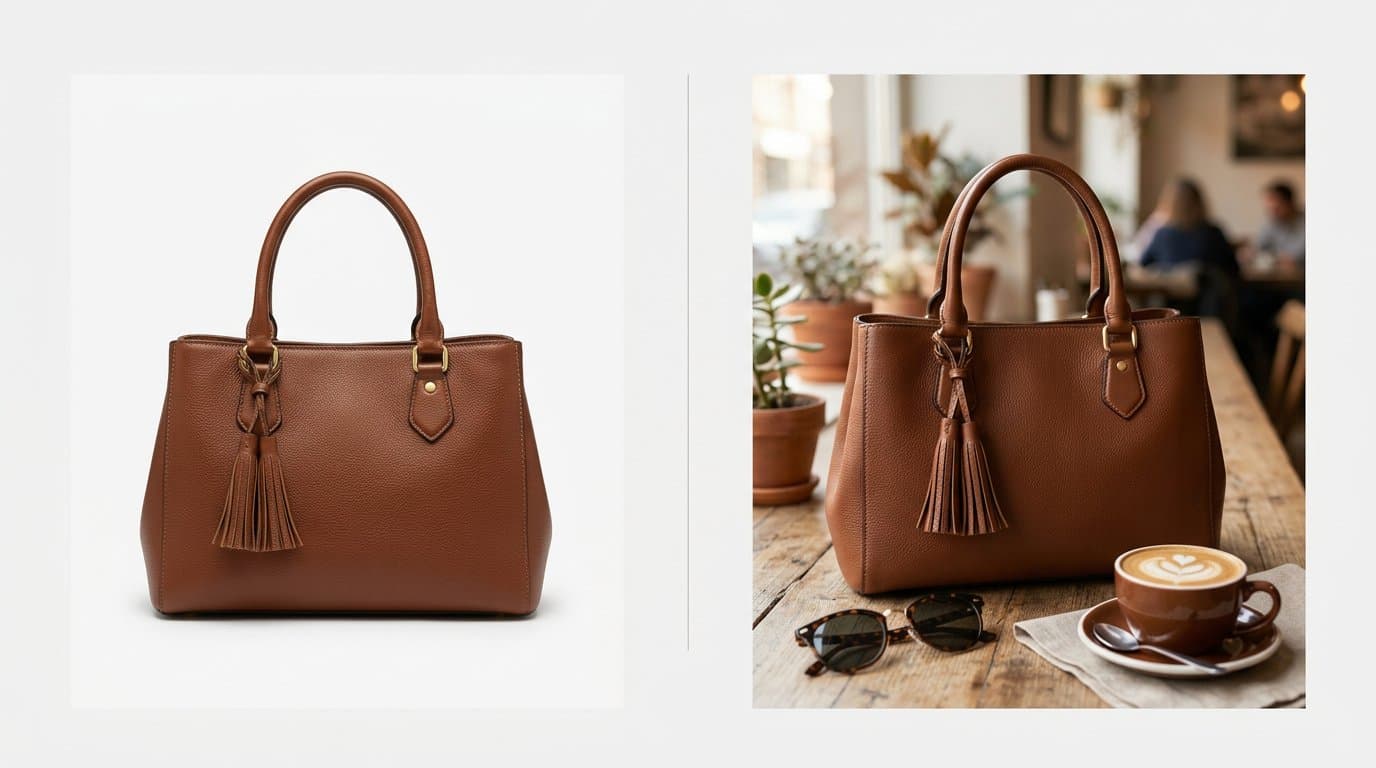
Two Styles, One Goal
Every product image you publish serves a single purpose: help the customer decide to buy. But the path to that decision isn't always the same. Sometimes shoppers need to see the product in crisp, clinical detail. Other times, they need to imagine it in their life.
Studio photography and lifestyle photography each do one of these jobs exceptionally well. The most successful Shopify stores use both — strategically.
What Studio Photography Does Best
Studio photography strips everything away to put the product front and center. A white or neutral background, even lighting, and no distractions. The product is the entire story.
This style excels when customers need to evaluate specific product attributes. Shape, color, texture, size, and construction details are all clearly visible. There's no ambiguity about what you're selling.
Studio shots are essential for main product images. They're what customers see first in search results, collection pages, and quick-view modals. They're also required by many marketplaces — Amazon, Google Shopping, and others mandate clean backgrounds for primary images.
The consistency of studio photography ties your catalog together visually. Every product looks like it belongs in the same store, which builds brand trust and makes browsing feel cohesive.
What Lifestyle Photography Does Best
Lifestyle photography places products in context. A pair of sunglasses on a cafe table. A backpack on a hiking trail. A throw blanket draped across a couch in a sunny living room.
Context does something studio shots can't — it helps customers imagine ownership. When someone sees a product being used in a setting they aspire to, the emotional connection drives purchase intent far more effectively than specifications alone.
Lifestyle images are also the currency of social media and advertising. They stop the scroll on Instagram, perform better in Facebook ads, and generate higher engagement in email campaigns. They tell stories that studio shots simply can't.
The Data Behind the Decision
Research consistently shows that a mix of both styles outperforms either alone. Studio images reduce returns because customers have accurate expectations about the product. Lifestyle images increase initial conversions because they create emotional desire.
One study found that product listings with both studio and lifestyle images saw 25 percent higher conversion rates than those with only studio shots. The studio images handled the rational evaluation, while the lifestyle images handled the emotional persuasion.
For Shopify stores, this translates to a practical recommendation: lead with studio shots as your primary product images, and use lifestyle images for secondary gallery positions, social media, and advertising.
The Traditional Cost Problem
There's a reason most small to mid-size Shopify stores don't use both styles. Traditional photography makes it expensive and logistically complex.
A studio shoot requires a controlled space, lighting equipment, and a photographer who understands product photography. A lifestyle shoot requires all of that plus locations, props, stylists, and often models. Running both for every product in your catalog quickly becomes cost-prohibitive.
This is where many merchants make the compromise — they pick one style and use it everywhere. But this means leaving conversion potential on the table.
How AI Changes the Equation
AI product photography eliminates the need to choose. With tools like Modelize, you can generate both studio and lifestyle versions of any product from a single source image.
Upload a flat product photo or a basic studio shot, and AI can generate clean white-background versions for your main listing images alongside lifestyle scenes that place the product in realistic contexts. Same product, multiple styles, no additional shoots required.
This means even a one-person Shopify operation can have the visual variety that previously required a full production team. You can test which styles work best for different products, platforms, and audiences — without committing to expensive shoots upfront.
Matching Style to Product Category
Not every product benefits equally from both styles. Here's a practical breakdown.
Apparel and fashion accessories benefit enormously from lifestyle imagery. Seeing clothes on a model in a real-world setting helps customers evaluate fit, style, and occasion. Studio shots on a white background remain essential for showing exact colors and details.
Electronics and tech products lean heavier toward studio photography. Clean shots that show every port, button, and detail drive informed purchase decisions. Lifestyle images showing the product in use can supplement, but clarity is king.
Home goods and furniture live in lifestyle territory. Customers need to see how a lamp looks on a nightstand or how a rug anchors a room. But dimensional drawings and isolated product shots still matter for the practical evaluation.
Beauty and skincare products do well with both styles equally. Studio shots show packaging details and product texture, while lifestyle shots create the aspirational mood that drives impulse purchases.
Platform-Specific Strategy
Different platforms favor different styles. Your Shopify store should use studio shots as primary images with lifestyle shots in the gallery. Amazon requires white-background studio shots for the main image but allows lifestyle shots in secondary positions.
Instagram and Pinterest overwhelmingly favor lifestyle content. These platforms are about aspiration and discovery, not clinical evaluation. Social ads with lifestyle imagery typically outperform studio shots in click-through rates.
Google Shopping listings benefit from clean studio shots that present clearly in small thumbnails. Email marketing, on the other hand, can effectively use both — studio shots for product announcements and lifestyle images for editorial or seasonal content.
Creating Cohesive Lifestyle Scenes
The key to effective lifestyle photography — whether AI-generated or traditional — is consistency. Your lifestyle images should feel like they come from the same world. Choose settings, color palettes, and moods that align with your brand identity.
If you sell minimalist home goods, your lifestyle settings should be clean, modern spaces with neutral palettes. If you sell outdoor gear, your scenes should feature nature, adventure, and rugged environments. The setting should reinforce what your brand stands for.
With AI, you can define these brand-specific scene templates once and apply them across your entire catalog. Every product gets placed in an environment that strengthens your brand story while feeling natural and authentic.
Making the Switch
If you're currently using only one photography style, adding the other doesn't need to be an all-or-nothing transition. Start with your top-selling products. Create lifestyle versions of your best studio shots, or vice versa.
Measure the impact on key metrics — conversion rate, time on page, add-to-cart rate, and return rate. The data will tell you which products and platforms benefit most from each style.
Most merchants find that the combination quickly pays for itself. Better imagery means higher conversions, fewer returns, and stronger brand perception — the fundamentals of sustainable e-commerce growth.
Generate Stunning Product Photos with AI
Modelize is a Shopify app that creates professional product images in seconds - AI models, backgrounds, and more. No photoshoot needed.